Structural Engineering
When a Transfer Slab Is Worth the Cost
Transfer structures are expensive. They also solve a specific problem that no amount of coordination can design away.
- Category
- Structural Engineering
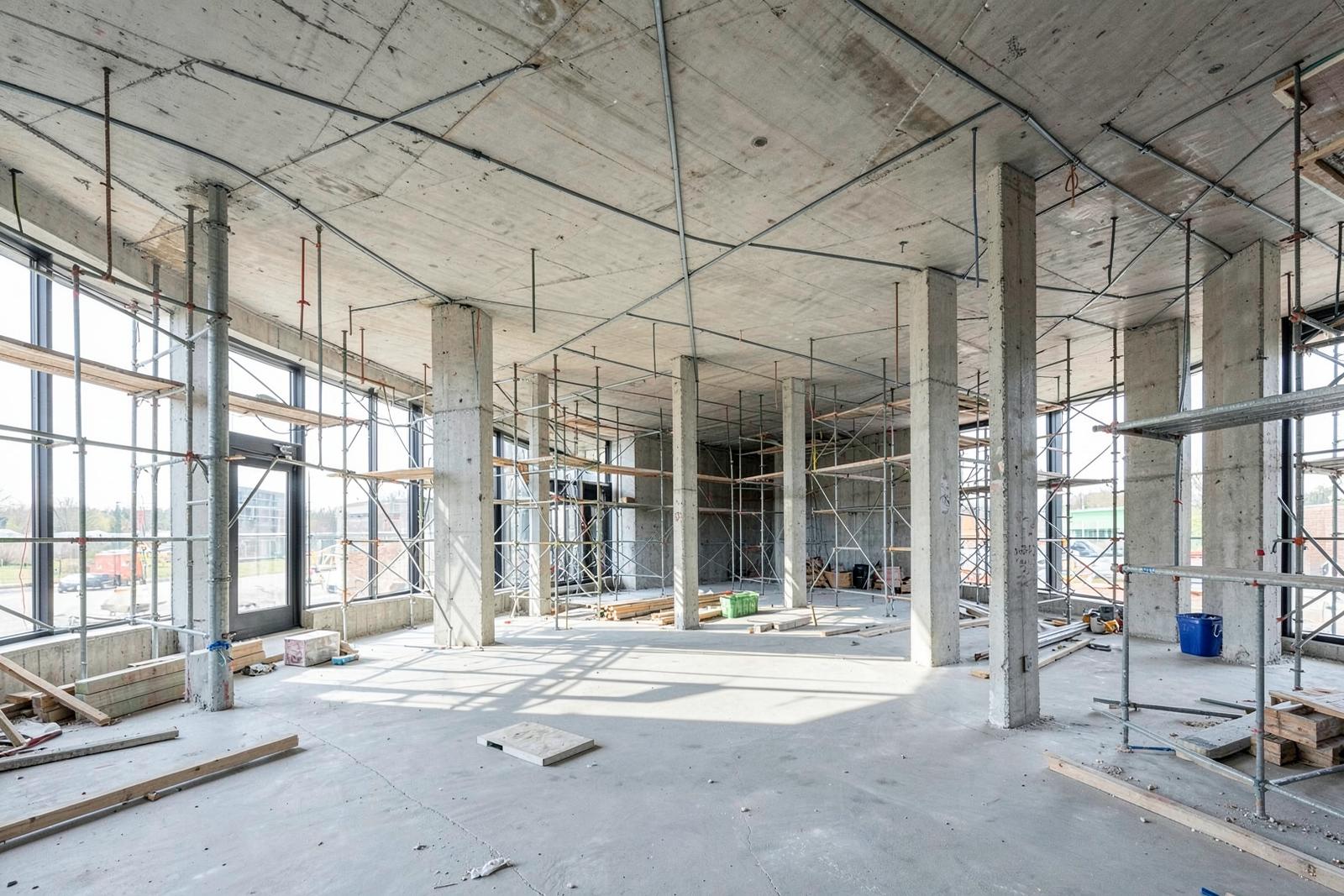
In mixed-use buildings, the parking module and the residential unit module rarely agree. Forcing them onto a shared grid compromises both — inefficient parking below, awkward unit plans above.
A transfer level breaks that dependency. Each program uses the grid that suits it, and the transfer structure resolves the difference. The cost is real: thicker slabs, heavier columns, more reinforcing, and a longer construction sequence.
The decision comes down to what the compromise costs over the life of the asset. Losing eight parking stalls per level or reducing a unit count by four is not a one-time expense — it is permanent revenue.
We generally run the comparison during schematic design, pricing both a shared-grid scheme and a transfer scheme with the contractor. On projects above roughly 150 units, the transfer option has usually won.
What matters most is making the call early. Adding a transfer level after design development means restarting foundation design, and that is where schedules break.
Start a conversation
Tell us what you're building.
Share the project, the site, and the schedule. Our team will tell you what it takes to move it forward — and what it will realistically require.
- Projects team
- info@vertexdesignsolution.co
- +1 (229) 791-2354